
Meal prep for beginners sounds simple until you try it after a long day of shipping features. You can refactor a legacy codebase and debug a race condition at 2 a.m., yet dinner still turns into delivery or a bowl of cereal eaten over the keyboard.
The fix isn’t more willpower. It’s a system. This guide gives you an easy weekly plan built around how developers actually work: one focused cooking session on the weekend, a short mid-week refresh and zero daily decisions about what to eat. It pairs well with the healthy eating habits for people who sit all day we covered earlier.
Table of Contents
- 1. Why Meal Prep Works for Developers
- 2. Meal Prep for Beginners: 5 Core Rules
- 3. Your Meal Prep Starter Kit
- 4. The Easy 2-Hour Weekly Plan
- 5. Meal Prep for Beginners Shopping List
- 6. The Sunday Prep Session, Step by Step
- 7. A Mix-and-Match Week
- 8. Tips to Make Meal Prep Stick
- 9. Common Beginner Mistakes to Avoid
- Frequently Asked Questions
- Final Thoughts
1. Why Meal Prep Works for Developers
Developers already know the value of doing work up front so the runtime stays fast. Meal prep for beginners applies the same idea to food.
- Less decision fatigue. You make decisions all day. Deciding meals in advance frees up mental energy for the work that matters.
- Fewer context switches. No mid-afternoon trips to find lunch and no 30-minute “what should I order” scroll.
- Steadier energy. Balanced meals with protein, fibre and complex carbs help you avoid the post-lunch crash that kills afternoon focus.
- Lower spend. Cooking in batches costs far less per meal than takeout or delivery.
2. Meal Prep for Beginners: 5 Core Rules
If you’ve never cooked ahead before, these rules of meal prep for beginners will save you from the most common early burnout.
- Start small (MVP first).
Don’t try to prep 21 meals in week one. Start with weekday lunches only. Once that’s stable, add dinners. - Prep components, not complete meals.
Cook a protein, a grain and a couple of vegetables separately. Combining them differently each day keeps things interesting. - Reuse ingredients.
One bag of spinach can go into a salad, a stir-fry and eggs. Fewer ingredients means less shopping and less waste. - Use sauces as your “config layer.”
The same chicken and rice tastes completely different with teriyaki, salsa or peanut sauce. - Respect food safety.
Most cooked leftovers keep 3 to 4 days in the fridge, according to the FoodSafety.gov cold storage chart. That’s why this plan uses a mid-week refresh instead of cooking everything on Sunday.
3. Your Meal Prep Starter Kit
Meal prep for beginners doesn’t require fancy gear. A few basics cover almost everything:
- 2 large sheet pans to roast protein and vegetables at the same time
- A rice cooker or medium pot for grains
- A large skillet or wok for quick stir-fries
- A sharp chef’s knife and a big cutting board
- 10 to 15 glass containers with lids, microwave-safe and easy to clean
- A few small jars for sauces and dressings
4. The Easy 2-Hour Weekly Plan
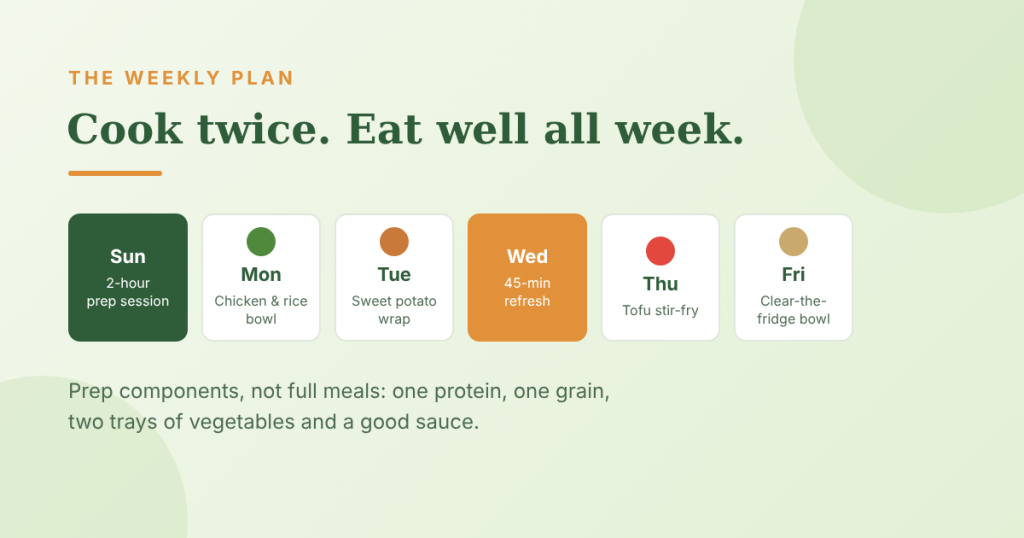
The whole system runs on two short sessions, about 2 hours 45 minutes a week in total:
- Sunday (about 2 hours)
Cook components for Monday through Wednesday. - Wednesday evening (30 to 45 minutes)
Cook a fresh protein and grain for Thursday and Friday.
Block both sessions in your calendar like a recurring meeting. If it isn’t scheduled, it won’t happen.
5. Meal Prep for Beginners Shopping List
This list feeds one person for five weekday lunches and dinners. Scale it up if you’re cooking for two.
- Proteins: 1 kg chicken thighs, 1 dozen eggs, 1 can chickpeas, 1 block firm tofu (or ground turkey)
- Grains: rice or quinoa, whole-wheat wraps
- Vegetables: broccoli, bell peppers, sweet potatoes, red onion, spinach, cherry tomatoes, cucumber
- Sauces and flavour: soy sauce, salsa, hummus, peanut butter, lemons, garlic, olive oil, your favourite spice mix
- Snacks: Greek yogurt (good for your gut bacteria), fruit, nuts
6. The Sunday Prep Session, Step by Step
Think of it as a build pipeline: start the long-running jobs first, then work on other tasks while they run.
- Preheat and start the rice (min 0–10)
Preheat the oven to 220°C (425°F). Start the rice cooker. - Load both sheet pans (min 10–30)
Season chicken thighs on one pan. Toss sweet potatoes, broccoli and peppers with oil and salt on the second. Roast both for 25 to 35 minutes, until the chicken is cooked through. - Eggs and salad base (min 30–50)
Hard-boil 6 eggs. While they cook, rinse the chickpeas and chop cucumber, tomatoes and onion. - Make two sauces (min 50–70)
A quick peanut sauce (peanut butter, soy sauce, lemon, water) and a lemon-garlic dressing. - Portion everything (min 70–100)
Let food cool slightly, slice the chicken and pack it all into containers. - Clean up (min 100–120)
A clean kitchen makes next week’s session much easier to start.
The Wednesday refresh: cook a second protein (tofu stir-fried with spinach and peppers, or ground turkey) and a fresh batch of rice or quinoa. This covers Thursday and Friday without stretching Sunday’s food past its safe window.
7. A Mix-and-Match Week
This is where meal prep for beginners gets fun. Here’s how the same components become five different meals, loosely based on the Harvard Healthy Eating Plate: half vegetables, a quarter protein, a quarter whole grains.
- Monday: Chicken, rice and roasted broccoli with peanut sauce
- Tuesday: Chicken and sweet potato wrap with spinach and salsa
- Wednesday: Chickpea salad bowl with lemon-garlic dressing and a boiled egg
- Thursday: Tofu and pepper stir-fry over fresh rice
- Friday: Clear-the-fridge bowl with whatever’s left, plus hummus and a fried egg
Keep breakfast simple: Greek yogurt with fruit and nuts, or two boiled eggs and a piece of fruit.
8. Tips to Make Meal Prep Stick
The hardest part of meal prep for beginners is keeping it going after week two. These habits help.
- Iterate weekly. Treat each week like a sprint. What did you skip? What did you get sick of? Adjust next week’s plan.
- Keep a “known good” recipe list. When a meal works, save it. Over time you’ll build a reliable library to pull from.
- Use the freezer as a backup. Soups, chili and cooked grains freeze well. Keep two or three emergency meals for crunch weeks, the kind that often lead to developer burnout.
- Make it part of your routine. Meal prep fits naturally into a productive work routine, because it removes one more daily decision.
- Walk after lunch. The time you save on cooking can go toward a short walk. Here’s how many steps a day you really need.
9. Common Beginner Mistakes to Avoid
Most meal prep for beginners plans fail for the same few reasons:
- Over-engineering week one. Five different recipes is a fast path to burnout. Two or three components is plenty.
- Prepping food you don’t like. “Healthy” meals you dread will end up in the bin. Start with food you already enjoy.
- Forgetting snacks. Long debugging sessions lead to vending-machine raids. Prep snacks too.
- Cooking for all seven days at once. Quality and safety drop after a few days. The two-session approach solves this.
Frequently Asked Questions
Here are answers to common questions about meal prep for beginners.
How long does meal prep take each week?
With this plan, about 2.5 to 3 hours in total: roughly 2 hours on Sunday and 30 to 45 minutes on Wednesday. That replaces hours of daily cooking, ordering and deciding.
Is meal prep cheaper than ordering food?
Almost always. Buying ingredients in bulk and cooking at home usually costs a fraction of delivery, especially once you add fees and tips.
What is the easiest way to start meal prep for beginners?
Prep only weekday lunches for the first two weeks. Pick one protein, one grain and two vegetables. Once that feels automatic, expand to dinners.
How long does meal prep food last in the fridge?
Most cooked meals stay safe for 3 to 4 days in the fridge. Freeze anything you won’t eat within that window.
Final Thoughts
Meal prep for beginners doesn’t have to be complicated. Block two hours this Sunday, cook a protein, a grain and a couple of trays of vegetables, and make one good sauce. By Wednesday you’ll notice fewer interruptions, steadier energy and more focus for the code that matters. Start small, iterate weekly and treat your meals like any other system worth maintaining.

 Shreya Khadka