
Have you ever noticed that your stomach feels uncomfortable after eating certain foods? Or wondered why some foods help your digestion while others leave you feeling bloated? Your gut plays an important role in how your body works, and the tiny microorganisms living inside it are part of the reason why.
Good bacteria for your gut help support digestion, break down certain foods and keep your digestive system working properly. The good news is that you don’t need a complicated diet to support them. A few simple changes to your daily eating habits can help maintain good bacteria for your gut and support your overall digestive health.
Table of Contents
- 1. What Are Good Bacteria in Your Gut?
- 2. Why Are Good Gut Bacteria Important?
- 3. What Foods Are Good for Your Gut Bacteria?
- 4. What Are Probiotics and Prebiotics?
- 5. What Happens When Your Gut Bacteria Are Not Balanced?
- 6. How Can You Keep Your Gut Healthy?
- Frequently Asked Questions
- Final Thoughts
1. What Are Good Bacteria in Your Gut?
Your gut is home to millions of tiny microorganisms, including bacteria. Some are helpful, while others can cause problems when they grow too much. Together, they form what is called the gut microbiome. Good bacteria for your gut help break down certain types of food, especially fiber that your body cannot fully digest on its own.
They also produce substances that support the health of your intestines. Think of your gut as a small community where different microorganisms live together. When this community is balanced, it helps your digestive system function normally. Your diet, sleep, stress levels and daily habits all influence this balance.
2. Why Are Good Gut Bacteria Important?
Good bacteria do more than help you digest food. They also support your intestinal lining and immune system. Some gut bacteria produce short-chain fatty acids when they break down fiber, which helps keep your colon healthy. Having enough good bacteria for your gut can also help your body make better use of certain nutrients.
However, everyone’s gut microbiome is different, so there is no single perfect balance. That’s why eating a variety of nutritious foods is a good habit, much like the other healthy eating habits that keep your energy steady. Instead of focusing on one special food, include different sources of fiber in your everyday meals.
3. What Foods Are Good for Your Gut Bacteria?
You don’t need expensive products or a special diet to start taking care of your gut. Many everyday foods can help support good bacteria for your gut.
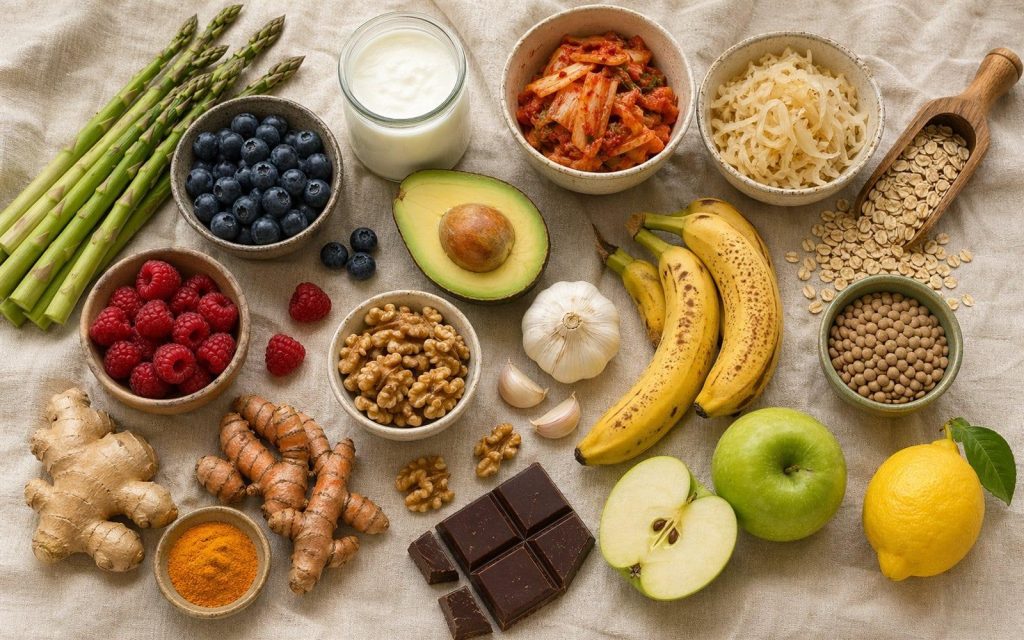
Everyday foods that support good bacteria for your gut:
- Fruits
Apples, bananas, berries and other fruits provide fiber and other nutrients. - Vegetables
Carrots, broccoli, spinach and leafy greens add fiber to your meals. - Beans and chickpeas
Good sources of fiber that certain gut bacteria use as food. - Whole grains
Oats and whole-grain foods help you get more fiber throughout the day. - Yogurt (dahi)
Yogurt with live cultures can provide living microorganisms. - Fermented foods
Some fermented foods contain live microorganisms, although the types and amounts vary.
Try adding these foods gradually, especially if you don’t usually eat much fiber. Increasing fiber too quickly can cause gas or bloating, so give your body time to adjust. Drinking enough water also helps.
4. What Are Probiotics and Prebiotics?
You may have heard people talk about probiotics and prebiotics when discussing gut health. Although their names sound similar, they do different things.
Probiotics are living microorganisms that can provide health benefits when consumed in adequate amounts. Some yogurts and fermented foods contain live microorganisms, but not every fermented food is a probiotic.

Prebiotics are substances, often certain types of fiber, that beneficial microorganisms in your gut use as food. Foods such as oats, beans, lentils, onions and some fruits provide prebiotic fibers.
| Probiotics | Prebiotics | |
|---|---|---|
| What they are | Living microorganisms that can offer health benefits in adequate amounts | Substances, often certain fibers, that good gut bacteria use as food |
| Where to find them | Yogurt with live cultures and some fermented foods | Oats, beans, lentils, onions and some fruits |
| How they help | Add helpful microorganisms to your gut | Feed the good bacteria already living in your gut |
You can start with ordinary foods rather than buying supplements. If you are considering a probiotic supplement for a specific health concern, ask a healthcare professional which option, if any, is right for you. To learn more about digestive health, the Liver and Digestive Disease Center (LDDC) provides helpful information about digestive conditions.
5. What Happens When Your Gut Bacteria Are Not Balanced?
Your gut microbiome can change because of your diet, medications, illness and daily habits. These changes affect the balance of microorganisms in your digestive system, and researchers continue to study how gut bacteria are connected to different health conditions.
When your gut health is affected, you may notice gas, bloating, constipation or diarrhea. However, these symptoms have many possible causes and don’t always mean your gut bacteria are out of balance. If digestive problems persist, become severe or keep returning, consult a healthcare professional.
6. How Can You Keep Your Gut Healthy?
Taking care of your gut doesn’t have to be difficult. Start with small changes to your daily routine that are easy to maintain:
- Eat a variety of fruits, vegetables, whole grains, beans and lentils
- Include yogurt with live cultures if you enjoy it and can tolerate dairy
- Drink enough water throughout the day
- Stay physically active and get enough sleep
- Find simple ways to manage stress
You don’t need to change everything at once. Start with one or two habits and build from there. Everyone’s digestive system is different, so pay attention to how your body responds to different foods and choose habits that work for you.
Frequently Asked Questions
Here are answers to common questions about good bacteria for your gut.
What are good bacteria for your gut?
They are helpful microorganisms living in your digestive system. They help break down fiber, support your intestinal lining and play a role in your immune system.
Which foods help good gut bacteria?
Fiber-rich foods like fruits, vegetables, oats, beans, lentils and chickpeas, plus yogurt with live cultures and some fermented foods.
Do I need a probiotic supplement?
Most people can start with everyday foods. If you are thinking about a supplement for a specific health concern, ask a healthcare professional first.
Can adding fiber cause bloating?
Yes, if you add too much too quickly. Increase fiber gradually and drink enough water so your body has time to adjust.
Final Thoughts
You don’t need a perfect diet to support good bacteria for your gut. Start with simple changes, like adding more fiber-rich foods and drinking enough water, and build from there. Small, consistent habits make the biggest difference to your gut health over time.

 Ilina Maharjan