
 Ilina Maharjan
Artificial Intelligence is no longer science fiction, or something we are going to see years from now. It is embedded in the fabric of our daily life often in ways we do not even see. Imagine a normal day, your phone can help you with directions, recommend a movie or a song, shop online, translate a message or have an AI tool summarize information. Artificial Intelligence can assist you in writing emails, analyzing data, organizing information or automating repetitive tasks. It is being tested in hospitals to assist doctors, and to enhance the processing of medical data. In education, students and teachers are using AI in new ways as a learning tool.
What’s interesting about this shift is that AI is no longer confined to the tech industry. It is becoming part of health care, education, business, transportation, communication and many other aspects of society. AI is going to change our lives; that’s no longer a question. The larger question is what we choose to do with it. AI is slowly becoming integrated into everyday lives in the way we work, communicate, receive healthcare and learn new things. You see some changes; some things happen behind the scenes. As AI continue to evolve, understanding the impact of AI is becoming more important not just for tech folks but for everyone. Our response to this technology now will shape the way we live and work in the years ahead.
The Growing Role of AI In Everyday Life
A lot of us are using artificial intelligence and don’t even know it. AI- powered systems might be working behind the scenes when a navigation app suggests a faster route, a streaming service recommends a movie, or an online store suggests a product. AI is also used for voice recognition, translation, image processing, spam detections and personalized recommendations in smartphones. And now generative AI has made this relationship even clearer. Now you can talk directly to artificial intelligence systems to ask questions, summarize documents, generate ideas and do a host of everyday tasks.

It has changed the way we engage with technology. Rather than having to learn complex commands. or navigate multiple systems, often we can just tell it what we want it plain language. Technology is becoming more conversational, more approachable and more personal. Artificial Intelligence is changing not just the technology we use, but also more common systems. It is changing our expectations of technology, slowly. We expect digital services to be faster, more personal and more responsive to our needs. This expanding role of AI is only the beginning. And it’s even more powerful when we think about areas beyond everyday convenience; the workplace, healthcare, education.
The Impact of AI on The Workplace
Workplace is among the spheres where the influence of AI starts becoming evident. Employees are utilizing AI to compose emails, summarize meetings, sort out information, analyze data, prepare presentations, respond to repetitive customer inquiries, and come up with ideas. In software engineering, AI can assist developers in coding and explaining the code, detecting errors, and creating documentation. Still, the emergence of AI technology doesn’t mean that people would inevitably lose their jobs.
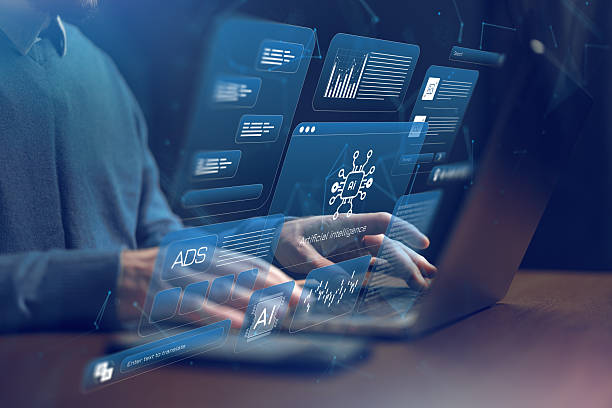
According to the International Labor Organization, generative AI is much more likely to change the character of many jobs by transforming individual tasks rather than replacing whole occupations at once. Imagine the person whose occupation requires him to prepare the same reports each time. He could delegate the task of collecting information and writing and initial version of the report to the AI system. The worker will be able to spend additional time reviewing the data, understanding the findings, collaborating with colleagues, and making decisions. The job didn’t vanish, but the way it is performed had changed. It means that skills like creativity, communication, critical thinking, problem solving, and decision making have become even more important.
Artificial Intelligence in Healthcare
Healthcare industry is one more area in which artificial intelligence has great potential. There are several ways AI can assist in analysis of medical images, identification of patterns in health-related data, making clinical decisions, performing administrative tasks, and conducting medical research. Artificial Intelligence needs to be considered as a tool that helps healthcare specialists rather than replacing them.

According to WHO, artificial intelligence is currently being used in diagnostic procedures, patient communications, and administrative processes. AI- assisted technologies also supports in medical imaging and disease diagnosis in different regions of the world. It is evident that there is a lot of potential. AI is capable of processing huge amounts of data very fast and identifying patterns that healthcare professionals may need to examine further. Healthcare also shows why AI needs to be applied carefully. Each medical decision has its unique aspects, medical history, expertise and human specialist understands it. There are also issues related to privacy, accuracy, bias and accountability. It may be doctors using AI to provide better and more efficient care.
Artificial Intelligence and Education
Education is another area that is experiencing changes as AI becomes more accessible. Students can utilize AI to understand complex concepts, practice languages, brainstorm ideas, summarize information, and get feedback. Teachers can use AI to prepare learning materials, create exercise, and tailor content to different learning needs.

How AI is Transforming Business
Business across different industries is finding new ways of incorporate AI in their operations. AI technology can be used to analyze customer behavior, prevent fraud, forecast demand, provide better customer support, manage large amount of data, and automate tedious processes. Customers may benefit from fast service and personalized services, whereas businesses will be able to ensure that clarified those task are.

However, AI is not just about installing new tool and achieving results right away. In addition to benefits, companies have to pay attention to such things as privacy, data protection, accuracy, fairness, and transparency. When accuracy matters, people should verify AI generated information, especially in cases when there are critical decisions to make. The true potential of AI technology lies not in it. What really matters is to be knowing when and where AI can genuinely improve the way people work.
Will AI Replace Jobs Done by Humans?
This is one of the primary issues that arise when speaking about artificial intelligence. The answer is yes and no at the same time because some tasks will be automated while some professions will change significantly. On the other hand, new professions will emerge in connection with AI design, deployment, cybersecurity, data protection, governance, and oversight.

Rather than focusing on the question of whether AI will replace jobs, it might be more reasonable to ask how AI will change the task within those jobs. An architect may use AI to explore creative solutions. A programmer may utilize AI to make the first draft of a program. A teacher may use AI to prepare learning materials. A doctor may use AI to process medical data. An analyst may use AI to detect patterns in a big dataset.
In all of these examples, AI will help to complete tasks faster; however, professional skills and knowledge will still be needed. That is why working with AI is an increasingly valuable removed because it sounded unnatural. It does not necessarily mean that everyone should learn how to develop AI, but being able to work with AI tools, check their results, protect sensitive data, and understand the limitations of AI technology is useful for many professions.
Problems With an Artificial Intelligence Dominated World
AI offers many benefits, but the risks associated with use of the technology should not be overlooked. Privacy is one of the concerns related of the use of AI. AI uses a large quantity of information; thus, the issue of proper information collection and protection becomes critical. Misinformation is another problem related to the development of artificial intelligence. It can create reliable text, image, audio, and video materials making the distinction between real and fake difficult.

Bias is another problem of artificial intelligence. AI system can reproduce the biases found in the data developers use to train them. Overdependence is another potential danger of the increasing development of AI. If people depend on artificial intelligence for writing, solving problems and making decisions in all spheres of life, they will lose chances to train their won skills. Last but not the least is the issue of responsibility. We need to develop and use AI responsibly, with appropriate safeguards, human oversight, and careful decision making.
The Future: Collaboration Between Humans and AI
The future of AI doesn’t necessarily need to become a battle between humans and machines. In many cases, collaboration would be the way to go. AI can process large amounts of data, detect patterns, automated routine tasks, and come up with solutions. Humans, meanwhile, are creative, empathy, humans bring judgment, aware of the context, communicative, and ethical. These strengths can complement each other.
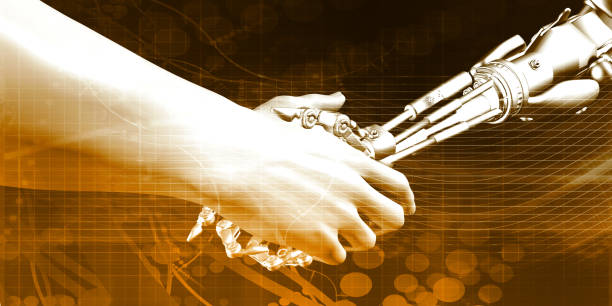
Rather than thinking solely about the question,” What can AI do instead of humans?” we also need to ask ourselves, “What can humans do with the help of AI that they wouldn’t have been able to do otherwise?” The answer to this question changes the whole picture. AI enables people to focus on creative, problem-solving, and communicate work, and less on routine operations.
Conclusion
Artificial Intelligence is transforming far more than the tech industry alone. It is affecting the way we communicate, work, learn, shop, travel, get medical care and deal with information. Some transformations are clear, while some are taking place in the shadows. There are tremendous possibilities with AI, yet there are real issues to address around privacy, misinformation, bias, jobs, and responsibility.
The goal is not to replace people with AI, but to figure out how we can work together with it. We need to make sure that technology helps us, not the other way around. Even though AI can do things faster and better than ever before, it’s still up to us to decide what the future will look like. We get to choose how we want to use AI and make sure it serves us, not the other way around. It’s about finding a way for humans and AI to collaborate and make the world a better place.
We have the power to shape the future, and it’s our responsibility to use AI in a way that benefits everyone. By working together with AI, we can achieve great things and create a brighter future for ourselves and for generations to come. A future where technology helps us to learn, grow, and thrive. We can do this by being responsible and thoughtful in how we use AI, and by making sure that it serves our needs and values. The future is full of possibilities, and it’s up to us to make the most of them. By working together and using AI in a responsible way, we can create a brighter, more amazing future for everyone.
Related Questions
What are common examples of AI in everyday life?
Common examples include voice assistants like Siri and Alexa, recommendation systems on Netflix and YouTube, spam filters in email, navigation apps like Google Maps, and AI-powered chatbots used in customer service.
Is AI something people use without realizing it?
Yes. Many everyday tools, such as autocomplete on your phone, facial recognition to unlock devices, and personalized social media feeds, already run on AI in the background.
How is AI changing the way people work?
AI is changing work by automating repetitive tasks, assisting with writing and research, analyzing large amounts of data quickly, and helping teams make faster, more informed decisions.
Will AI replace human jobs?
AI is more likely to change how many jobs are done, rather than replace them outright, automating repetitive tasks while creating new roles focused on managing, reviewing, and building AI-powered tools.
Do I need technical skills to benefit from AI tools?
No. Many everyday AI tools, like chatbots, voice assistants, and writing assistants, are designed to be used without any coding or technical background.

 admin
admin